Hernia Pain or Muscle Strain? Can You Still Exercise Safely

A pulling feeling in the groin. Pressure near the belly button. A small bulge that shows up when you cough, lift, or strain. These symptoms can make active people pause fast, especially when the next question is, “Can I still work out, or am I making this worse?”
Hernias are common, but they are also easy to misunderstand. Some people avoid all exercise out of fear. Others try to “push through” because the pain feels like a pulled muscle. Neither approach gives the full picture.
This guide explains what inguinal and umbilical hernias are, what they can feel like, how they differ from muscle strains, and where physical therapy may fit into a safe plan for exercise, lifting, work, and recovery.
This article is for general education only and is not a diagnosis. A new bulge, worsening pain, or persistent groin or abdominal symptoms should be evaluated by a healthcare professional.

What exactly is a hernia?
A hernia happens when tissue pushes through a weakened area in the wall that normally helps hold it in place. In the abdomen, that usually means part of the abdominal contents pushes through a weak spot in the muscle or connective tissue.
Think of the abdominal wall like a layered support system. It includes muscles, fascia, and connective tissue that help manage pressure when you move, breathe, cough, lift, or bear down. If one area becomes weak enough, pressure from the inside can create a visible or noticeable bulge.
That bulge may come and go. It may be more obvious when standing and less obvious when lying down. It may feel uncomfortable, or it may not hurt much at all.
Two common types are inguinal hernias and umbilical hernias.
Type of hernia | Where it shows up | What someone may notice |
Inguinal hernia | Groin area, often near the lower abdomen or inner groin crease | Groin bulge, pulling, pressure, heaviness, discomfort with lifting or coughing |
Umbilical hernia | At or near the belly button | Bulge at the navel, pressure around the belly button, discomfort with straining or abdominal effort |
Inguinal hernias are especially common in the groin region. Umbilical hernias develop around the belly button, where there may be a natural area of weakness.
The key point is simple: a hernia is a structural opening or weak spot. Exercise, posture, and strength can affect symptoms and pressure, but they do not close the defect once it exists.
What does a hernia feel like?
A hernia does not feel the same for everyone. Some people notice a clear bulge first. Others feel pressure, heaviness, or a dull ache before they see anything.
Common symptoms include:
A bulge in the groin or around the belly button
Pressure or heaviness in the lower abdomen, groin, or navel area
Pulling, aching, or burning discomfort
Symptoms that increase with coughing, sneezing, lifting, bending, or straining
Symptoms that ease when lying down or resting
A feeling that something is “popping out” with effort
A hernia may feel worse near the end of the day, after a workout, or after heavy work. It may also become more noticeable during movements that raise pressure inside the abdomen, such as heavy squats, deadlifts, loaded carries, sit-ups, aggressive bracing, or breath-holding.
Pain level does not always match seriousness. A small hernia can be very irritating. A larger one may feel more like pressure than pain. That is why a medical exam matters, especially with a new lump.
When symptoms need urgent medical care
Most hernias are not emergencies, but some symptoms need prompt attention.
Seek urgent medical care if a hernia bulge becomes stuck, suddenly very painful, red or discolored, or cannot be gently reduced when that has been possible before. Also seek care for nausea, vomiting, fever, severe abdominal pain, or inability to pass stool or gas along with a painful bulge.
These can be signs that tissue is trapped or its blood supply is affected. That situation needs medical evaluation right away.
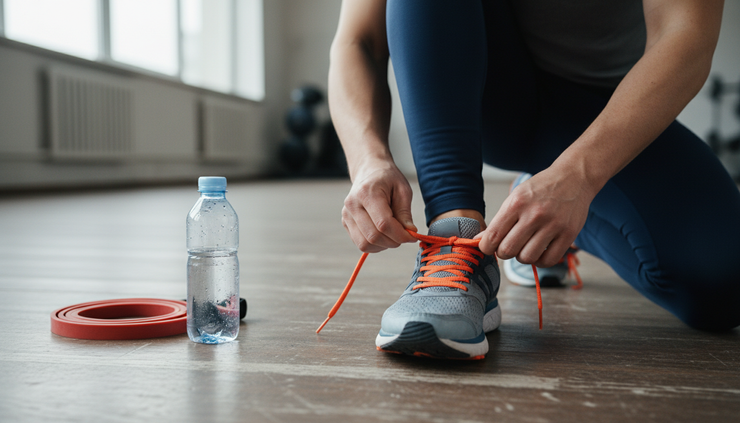
Hernia pain and muscle strain can feel similar
Groin pain does not always mean hernia. A pulled muscle does not always mean “nothing serious.” The tricky part is that symptoms can overlap.
A groin strain often involves the adductor muscles, hip flexors, lower abdominal muscles, or nearby tendons. It may start after a sprint, quick change of direction, heavy lift, slip, or sudden overstretch. The pain is often linked to muscle contraction, stretching, or direct pressure on the injured area.
A hernia may also cause pain with lifting, running, bending, or twisting. The difference is that hernias often involve a bulge or pressure that changes with position and abdominal effort.
Here are some clues that can help separate the two, though they do not replace an exam.
Symptom pattern | More suggestive of hernia | More suggestive of muscle strain |
Visible or touchable bulge | Common | Not typical |
Worse with coughing or bearing down | Common | Less typical, though possible |
Pain with resisted hip or abdominal movement | Possible | Common |
Started after a sudden athletic movement | Possible | Common |
Pressure or heaviness in the groin or belly button | Common | Less typical |
Tender muscle belly or tendon | Possible | Common |
A new lump should always be checked. Persistent groin pain also deserves attention, even without a bulge. Hip joint problems, pelvic floor issues, nerve irritation, tendon injuries, low back referral, and other conditions can all create groin or lower abdominal discomfort.
That is why “Hernia Pain or Muscle Strain? Can You Still Exercise Safely” is not just a catchy question. It is often the real decision point for active adults who want to keep moving without ignoring a meaningful symptom.
Can you still exercise with a hernia?
Exercise is not automatically off-limits with a hernia. Many people continue some form of activity while they are being monitored by their physician or waiting for a surgical consult. The right plan depends on symptoms, hernia size and type, medical risk, training goals, and how the body handles pressure.
The main issue is not exercise in general. The issue is how much pressure the activity creates and how your body manages that pressure.
Some activities may feel fine:
Walking
Light cycling
Gentle mobility work
Low-load strength training
Breathing and coordination drills
Modified core and hip exercises
Other activities may need changes, at least for a while:
Heavy barbell lifting
Max-effort bracing
High-intensity intervals that provoke symptoms
Loaded carries
Aggressive abdominal exercises
Heavy overhead lifting
Movements that require breath-holding
Exercises that make the bulge more prominent or painful
A simple rule can help: if an exercise causes bulging, pressure, pulling, or pain that builds during the set, stop and modify it. If symptoms linger afterward or increase over time, the activity is probably too much right now.
This does not mean the goal is to become fragile. It means the plan should match the current condition.
Core strength is not the whole answer
Many people hear, “Strengthen your core,” and assume that more planks, crunches, sit-ups, or heavy bracing will solve the problem. That advice can be too vague, and sometimes it can make symptoms worse.
The core does more than create stiffness. It helps coordinate breathing, trunk control, pelvic position, hip force, and pressure inside the abdomen. If someone bears down hard, holds their breath, and pushes pressure into the weak spot, “core work” may reproduce the exact problem.
A better question is, “Can the trunk manage load without excessive pressure into the hernia?”
That may involve:
Exhaling during effort
Reducing breath-holding
Adjusting brace intensity
Changing the load, tempo, or range of motion
Improving hip and trunk coordination
Using positions that reduce symptoms
Building strength without repeated bulging or straining
For example, a heavy double-leg lift might provoke groin pressure, while a lighter split-stance variation feels controlled. A full plank may create belly button pressure, while an incline plank or dead bug variation is manageable. A squat pattern may be fine at one load but irritating at another.
The answer is not always rest. The answer is often better matching.

Where physical therapy fits in
Physical therapy does not push a hernia back in permanently. It does not repair the opening in the abdominal wall. Surgery is the way a hernia defect gets repaired when repair is needed.
Physical therapy can still play a valuable role. It can help someone move better, manage symptoms, and continue activity more safely while working with their medical team.
At MGo OrthoPelvic, a physical therapy plan for someone with suspected or diagnosed inguinal or umbilical hernia symptoms may include assessment of:
Breathing mechanics during movement and lifting
Pressure management strategies
Core and trunk coordination
Hip strength and mobility
Pelvic and abdominal muscle function
Exercise technique and symptom triggers
Work, fitness, or recreation demands
The goal is to understand what happens when symptoms appear. Does the person hold their breath during every lift? Do they bear down to start movement? Is the hip weak on one side, causing the trunk to compensate? Does the exercise selection create more abdominal pressure than the person can currently control?
From there, PT can help modify the plan.
That may include changing the exercise, load, position, breathing strategy, or range of motion. It can also include building strength around the hips, trunk, and pelvis without repeatedly provoking the bulge or pain.
For someone who needs surgery, PT may help before and after the procedure when appropriate. Before surgery, the focus may be preparing the body, maintaining fitness, and learning better pressure habits. After surgery, the focus may shift to gradual return to walking, mobility, strength, lifting, work, and recreation based on the surgeon’s guidelines.
Do all hernias need surgery?
Not always right away, but this decision belongs with a qualified medical provider.
Some hernias are monitored when symptoms are mild and risk is low. Others are repaired because symptoms interfere with life, the hernia is enlarging, or the medical team has concerns about complications. The type of hernia, overall health, activity demands, and symptom behavior all matter.
A practical way to think about it:
Situation | Possible next step |
New bulge in the groin or belly button | Schedule a medical evaluation |
Bulge with mild symptoms that come and go | Ask about activity guidance and monitoring |
Pain that limits exercise, work, or daily tasks | Discuss medical options and PT support |
Severe pain, stuck bulge, vomiting, fever, or discoloration | Seek urgent care |
If surgery is recommended, that does not mean someone failed at exercise or rehab. Hernias are structural. Rehab can support the system around the hernia, but it cannot close the opening.
How to approach exercise while you are waiting for guidance
If a hernia is suspected or confirmed, the safest exercise plan is individualized. Still, a few general principles can help reduce unnecessary irritation.
Keep symptoms quiet during training.
Mild awareness may happen, but pain, pressure, or visible bulging that increases during a set is a sign to back off.
Avoid breath-holding under strain.
Many people brace by clamping down and bearing down. Try exhaling through the hardest part of a movement, especially during lifting or standing effort.
Reduce load before removing the movement.
A lighter squat, hinge, carry, or press may be better than stopping strength work completely.
Change your position.
Incline, supported, seated, side-lying, or split-stance positions may reduce pressure compared with unsupported or high-tension positions.
Watch the 24-hour response.
If symptoms are worse later that day or the next day, the activity may need more modification.
Do not test the bulge repeatedly.
Constantly coughing, bearing down, or pressing on the area to “check it” can irritate symptoms and increase worry.
Get the lump evaluated.
A provider can help determine whether it is a hernia, strain, lymph node, cyst, vascular issue, or something else.

The most useful next step
A bulge, pulling pain, or pressure in the groin or belly button area deserves the right kind of attention. It may be a hernia. It may be a muscle strain. It may involve the hip, pelvis, trunk, or another nearby structure. Guessing can lead to too much rest, too much strain, or the wrong exercises.
If a hernia is present, exercise may still be possible, but it should not be based on generic “core strengthening.” A safer plan looks at breathing, pressure, trunk coordination, hip strength, symptoms, and the real demands of work, fitness, and daily life.
Physical therapy can help guide that process, while your physician manages diagnosis, monitoring, and surgical decisions when needed. The goal is not to ignore the hernia or fear every movement. The goal is to understand what is happening, reduce unnecessary strain, and find the safest path back to the activities that matter.


Comments